
Go From Survival Mode to Learning Mode: Core Principles of Trauma-Informed Care
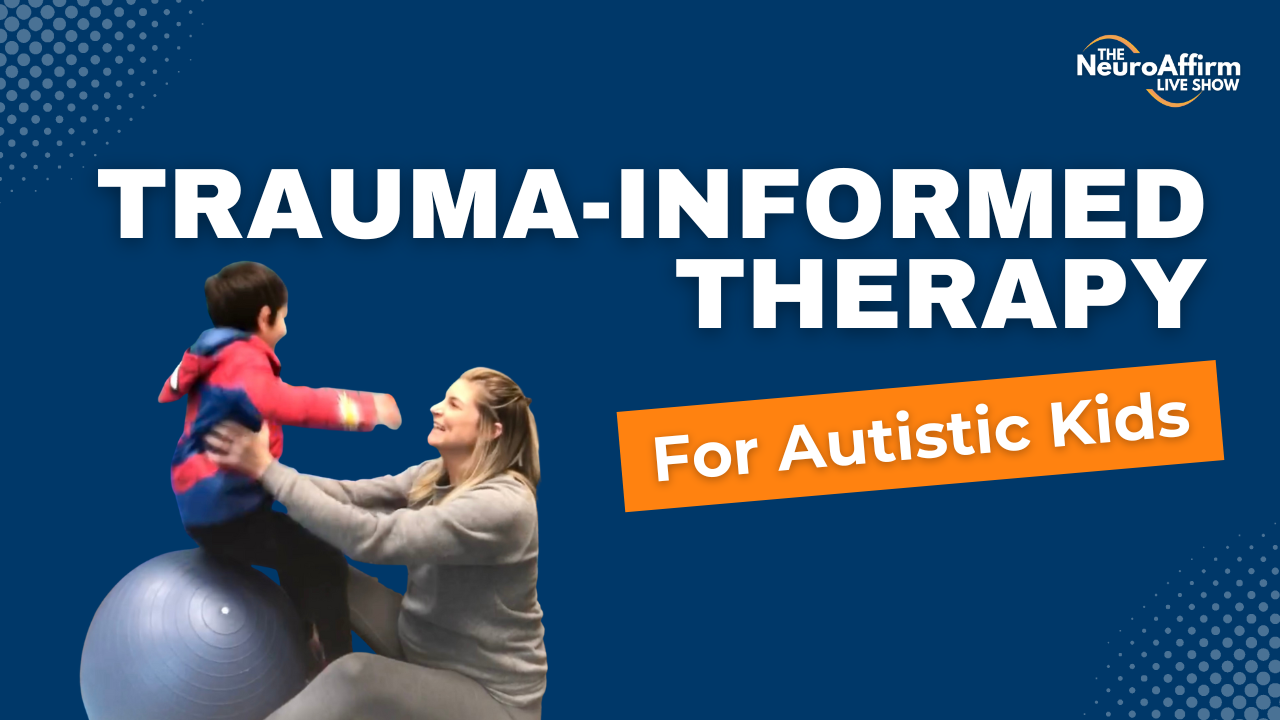
Let’s start with something that feels uncomfortable but needs to be said out loud:
Being autistic in a world built for neurotypical people is inherently traumatic.
Not because autistic kids are broken.
Not because their nervous systems are wrong.
But because the world constantly asks them to adapt, comply, suppress, and perform in ways that don’t honor how their brains and bodies work.
So when autistic kids walk into our therapy rooms, many of them aren’t ready to “learn.”
They’re waiting.
Waiting to see if this space is safe.
Waiting to see if the compliance-based approach is coming.
Waiting to see if they’ll be corrected, controlled, or misunderstood… again.
And that’s why trauma-informed care isn’t an add-on. It’s the foundation.
Why Safety Comes Before Learning
When a child’s nervous system is in survival mode, learning is not the priority.
Safety is.
And safety isn’t just about physical harm. It’s about whether a child feels safe being themselves in your space.
That’s where the SAFE System comes in.
The SAFE System: A Trauma-Informed Foundation
The SAFE system is a simple, powerful way to make any environment more neuroaffirming and trauma-informed – not just therapy rooms.
S is for Safety
Safety has three parts:
- Physical safety – the child feels secure in their body and space
- Sensory safety – lighting, noise, movement, and input support regulation
- Emotional safety – the child trusts that the adult wants what’s best for them
If a child doesn’t feel safe with who they’re with, learning will not happen – no matter how good the activity is.
A is for Autonomy
Autonomy means the child has real choices in what they’re doing. Not fake choices.
Not “you can do it now or in two minutes.”
Real autonomy builds intrinsic motivation.
This includes bodily autonomy, too – which means no hand-over-hand prompting, no forced positioning, and no overriding a child’s “no.”
When kids feel control over their bodies and actions, their nervous system can finally exhale.
F is for Familiarity
Familiarity is about trust and predictability.
Kids need to know:
- What’s going to happen
- What’s expected of them
- How this adult responds when things get hard
Less predictability = more anxiety.
And for kids with past traumatic experiences, unpredictability can lead to hypervigilance.
This is where people get confused, so let me be clear:
Predictability is not the same thing as compliance.
We’re not talking about rigid visual schedules or forcing kids through tasks.
We’re talking about helping kids feel oriented and prepared so their nervous system doesn’t have to stay on high alert.
E is for Empowerment
Empowerment is the long game.
The ultimate goal isn’t “good behavior.” It’s self-advocacy.
But kids can’t advocate for their needs if we don’t first validate their emotions, honor their sensory needs, and believe in their communication.
Empowerment also means teaching kids that regulation is a skill, not something they’re either good or bad at.
When we frame regulation as learnable, kids gain confidence instead of shame.
Four Trauma-Informed Shifts We Can Make Right Now
Trauma-informed care isn’t about overhauling everything overnight. It’s about intentional shifts.
- A Shift in Language
How we talk about kids shapes how we see them – and how others see them.
Words matter. They influence expectations, goals, and interactions.
- A Shift in Environment
Our spaces should support regulation, not demand it.
Think dimmer lighting, movement options (like wobble stools), reduced sensory clutter, etc.
If the environment is dysregulating, the child isn’t the problem.
- A Relational Shift
This is huge. Trauma-informed care levels the playing field.
It prioritizes connection over compliance, co-regulation over control, and partnership over power.
Kids don’t learn from people they don’t feel safe with.
- A Shift in Goals
Our goals dictate everything – the activities we choose, the expectations we set, and what we reinforce.
If goals are rooted in compliance, therapy will be too.
Trauma-informed goals focus on:
- Regulation
- Autonomy
- Self-advocacy
- Functional communication
- Not suppressing coping behaviors
Because autistic kids don’t need more compliance.
They need safety.
And when kids feel safe, learning follows.
Want Support Putting This Into Practice?
If you’re a member of our NeuroAffirm Academy, you already have access to our SAFE System Training, Trauma & Regulation Lens Packet, and Trauma-Informed Reframe Cheat Sheet.
These resources are designed to help you apply trauma-informed care in real sessions with real kids – not just understand it conceptually.
And if you’re not a member yet, this is one of many reasons to join.
>> Click here to learn more about joining us in the NeuroAffirm Therapy Academy.
And if you want to hear more about this topic straight from the source, check out our recent NeuroAffirm Live Show: “Go From Survival Mode to Learning Mode with a Trauma-Informed Approach,” Ep. 109.
