
My Top 3 Go-To Activities for Autistic Toddlers & Preschoolers (That Grow With You and the Child)
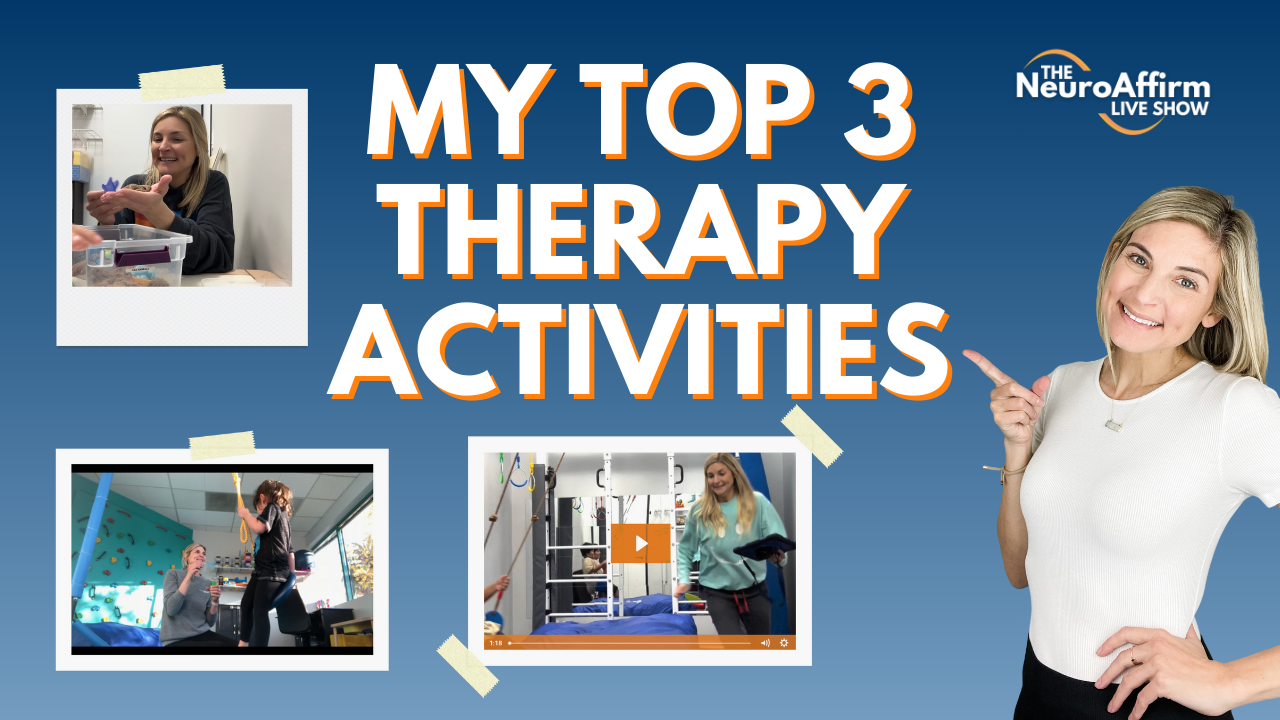
If you find yourself constantly searching for new activities to use in therapy sessions, this is for you.
Many therapists working with autistic toddlers and preschoolers quietly carry the same pressure: the idea that we always need to be doing something new. New materials. New games. New ideas.
When sessions start to feel repetitive or kids lose interest, it’s easy to wonder if you’re getting stale – or worse, if you’re not being a “good enough” therapist.
The truth is, boredom and self-doubt don’t usually come from a lack of creativity. They come from working without flexible foundations.
What most therapists actually need isn’t more activities. It’s activities that can evolve.
The most effective sessions are built around routines that feel familiar and safe for the child, but dynamic and engaging for you.
Activities that can be adjusted, expanded, and layered– so you’re not starting from scratch every session, and the child isn’t relying on novelty to stay regulated or engaged.
That’s exactly what the activities below are designed to do.
These are three go-to activities I come back to again and again with autistic toddlers and preschoolers because they support regulation, communication, and connection, while still giving you room to grow, adapt, and try something new.
Activity #1: The Hello Song (With Regulation Built In)
The hello song is often the first activity in a session, but its impact depends on how it’s used.
Instead of treating it as a quick formality, this activity becomes powerful when it incorporates the sensory input a child needs to feel regulated from the very start. That might mean singing while swinging, adding gentle spinning, offering deep pressure like arm squeezes, or pairing the song with movement that helps their nervous system settle.
To keep the activity engaging and language-rich, you can bring in characters the child already loves. If a child is motivated by Mickey Mouse, you can sing the hello song to Mickey first and then to Minnie, Goofy, or other familiar characters. Each repetition creates new opportunities for joint attention, language modeling, and connection, without losing the structure of the routine.
This works because it creates predictability and safety while prioritizing regulation. When kids feel grounded at the start of a session, everything that follows becomes more accessible.
Activity #2: Felt Boards and Nursery Rhymes
Nursery rhymes are a powerful tool because they combine rhythm, repetition, and predictability; three things that support both regulation and learning.
Using a felt board allows you to make these rhymes visual, interactive, and flexible. You can start with familiar favorites or introduce new ones slowly, depending on the child’s comfort level. The key is building off what they already know.
Once a rhyme is familiar, you can change the words, swap characters, or adapt the story to reflect the child’s interests. For example, a traditional rhyme can turn into an animal-themed version using puppets or felt characters, creating opportunities for expressive language, engagement, and playful interaction.
Sensory input can also be layered in – movement, tactile materials, or rhythm-based actions – to keep the activity regulating as well as engaging.
This kind of activity grows with the child. It can support early imitation and attention, or expand into storytelling, turn-taking, and language complexity over time.
Activity #3: Tunnel Obstacle Courses With a Purpose
Obstacle courses are a staple in early intervention, but they become even more effective when they’re anchored to a predictable routine.
Using a tunnel paired with a consistent toy like a puzzle, Potato Head, or another preferred activity creates a clear structure the child can anticipate. The tunnel becomes the transition, and the toy becomes the motivation.
As the child becomes more comfortable, you can increase complexity by adding multiple steps, sequencing tasks, or incorporating new materials like colorful tiles, pretend cupcakes, or multi-piece puzzles. The activity stays familiar, but the challenge evolves.
This supports regulation through movement while also building executive functioning, communication, and engagement. It’s another example of doing less, but doing it better.
When You’re Running Out of Ideas, It’s Not a Personal Failure
If you’ve ever felt like:
- You’re running out of therapy ideas
- Your sessions aren’t keeping kids engaged the way you want
- You’re not seeing the progress you hoped for
You’re not alone.
These feelings are incredibly common, especially when you’re working hard and carrying the responsibility of “getting it right.”
That’s actually what led to the creation of the NeuroAffirm Video Library.
I started noticing how quickly therapists’ confidence grew when they could see real sessions – real kids, real therapists, real moments. Later, reading an exit interview where a therapist shared that watching other therapists in therapy was the most valuable learning experience they had reinforced what I already suspected: we learn best when we don’t have to imagine what good therapy looks like – we can see it.
The NeuroAffirm Video Library is designed to offer that reassurance and inspiration. It includes over 50 short videos organized by age, with a wide range of skill levels represented. Each activity includes a description, the goal, materials needed, and NeuroAffirm Notes to help you understand the “why” behind what you’re seeing.
It’s not about copying sessions perfectly. It’s about giving you solid foundations you can trust and adapt.
If having real, regulation-supportive activity examples would be helpful for you, we’d love to have you inside the NeuroAffirm Academy. Members get access to our brand new video library designed to support confidence, clarity, and growth in therapy sessions.
>> Click here to join the NeuroAffirm Academy and explore the video library.
Because great therapy doesn’t come from endless novelty. It comes from thoughtful routines, regulation-first approaches, and the confidence to build on what already works.
And when you have that, sessions feel lighter both for you and for the kids you support.
