
Why Trauma-Informed Therapy Is a Non-Negotiable for Autistic Kids
If you’ve been in the therapy world for more than five minutes, you’ve probably heard the word trauma tossed around like confetti. But here’s the thing nobody seems to talk about enough:
Trauma doesn’t always look like abuse. It’s not always a “big event,” a crisis, or something dramatic.
Trauma can be subtle, ongoing, and woven into the everyday experiences of autistic kids – especially when they’re repeatedly asked to suppress who they are.
And yes… that absolutely includes many traditional therapy approaches.
So let’s break down exactly why trauma-informed therapy is a non-negotiable when working with autistic children, what trauma actually does to the brain and body, and how we as professionals and caregivers can support kids without unintentionally harming them.
The Hidden Trauma of Traditional Therapy Approaches
Here’s the hard truth most of us were never taught in grad school:
Traditional, compliance-based therapy can retraumatize autistic kids.
I know – big statement. But let’s look at what “traditional” therapy has often asked kids to do:
- Make eye contact even when it’s painful or dysregulating.
- Stop stimming because it looks “inappropriate.”
- Put away AAC because “they need to use their voice.”
- Mask natural autistic communication like echolalia.
- Perform “expected behaviors” instead of honoring their needs.
These aren’t harmless asks. They directly impact safety, regulation, and the nervous system.
When a child is repeatedly told to stop doing the very things that help them feel safe, understood, and grounded, that is trauma.
Not dramatic movie-scene trauma. But subtle, chronic, nervous-system-altering trauma.
What Trauma-Informed Therapy Actually Means
Being trauma-informed isn’t a trend. It’s not a “nice bonus.” It is the foundation of ethical therapy.
Trauma-informed care recognizes that past or ongoing stressors shape how a child thinks, feels, communicates, plays, and regulates.
Instead of asking: “What’s wrong with this child?”... we’re asking: “What has this child experienced, and how is that shaping their nervous system right now?”
A trauma-informed approach shifts us from correction to connection, from compliance to collaboration.
Most importantly? It ensures that our interactions do not re-traumatize, but instead promote safety, trust, and healing. Because so many of the behaviors we label as “challenging” are actually protective.
How Trauma Impacts the Brain & Nervous System
Let’s get nerdy for a second, because this part is so important.
- Trauma reshapes the brain toward survival
Trauma teaches the brain to be on high alert. The amygdala fires faster. The prefrontal cortex (planning, language, EF) goes offline quicker. Neutral cues feel threatening. The child isn’t “being dramatic.” Their brain is literally protecting them.
- Trauma dysregulates the autonomic nervous system
Kids may shift between:
Hyperarousal (fight/flight)
– Restless, fidgety, on-edge
– Big reactions to small cues
– Hard to focus because the brain is scanning for safety
Hypoarousal (freeze/shutdown)
– Low energy, zoning out
– Slow responses
– Reduced communication
Some kids bounce between both. Not because they’re “noncompliant.” Because their nervous system is overwhelmed.
- Trauma rewires sensory processing
When the world feels unsafe, the sensory system becomes a detective looking for danger. Increased startle response. Heightened sound/touch sensitivities. Need for more proprioceptive/vestibular input. Difficulty with unpredictability. The list goes on.
- Trauma changes how kids connect with others
Safety shapes connection. A child who avoids, clings, challenges, or withdraws isn’t choosing difficult behavior – they’re choosing safety.
- Trauma reduces executive functioning & communication
Because the brain is prioritizing survival, not learning. Flexible thinking decreases. Working memory drops. Language retrieval becomes harder. Transitions feel impossible.
Again… not “won’t.” It’s “can’t right now.”
- Trauma impacts the capacity to learn
Kids want to learn. They can learn. But they can only learn when they feel safe. As Ross Greene said “Kids do well if they can”.
Autism & Trauma: The Overlooked Connection
Autistic children are at higher risk for trauma due to:
- Medical trauma
- Restraint/seclusion
- Bullying
- Sensory overwhelm
- Constant correction
- Misunderstanding and unmet needs
As an autistic colleague once said to me:
“There is inherent trauma in being autistic in a world built for neurotypical people.”
And that hit me like a freight train. Because it’s true. Trauma for autistic kids often exists in the form of:
Big T Trauma – Life-threatening or dangerous events.
Little t Trauma – Chronic stress, the daily nervous-system grind of being misunderstood, corrected, or unsupported.
Many autistic kids experience both. And when we ignore trauma, we mislabel dysregulation as “noncompliance.”
Why Trauma-Informed Therapy Is the Way Forward
When therapy fails to account for trauma, it can unintentionally force participation, withhold supports, punish coping behaviors, increase overwhelm, and damage trust
But when we are trauma-informed, everything shifts. Safety becomes the priority. Regulation comes before demands. Autonomy is respected. Stimming is honored. AAC is valued. Connection drives engagement.
This is how kids learn. This is how kids trust. This is how kids thrive.
Because trauma-informed therapy isn’t about changing kids. It’s about changing our approach so kids can finally feel safe enough to grow.
Want Tools to Make Trauma-Informed Care Easier?
If you’re a professional looking to go deeper, our NeuroAffirm Therapy Academy is packed with trainings, resources, and a community of neurodiversity-affirming clinicians.
And right now, when you join the Academy, you’ll get our brand-new Trauma & Regulation Lens Packet – a hands-on resource to help you identify, understand, and respond to trauma in every session.
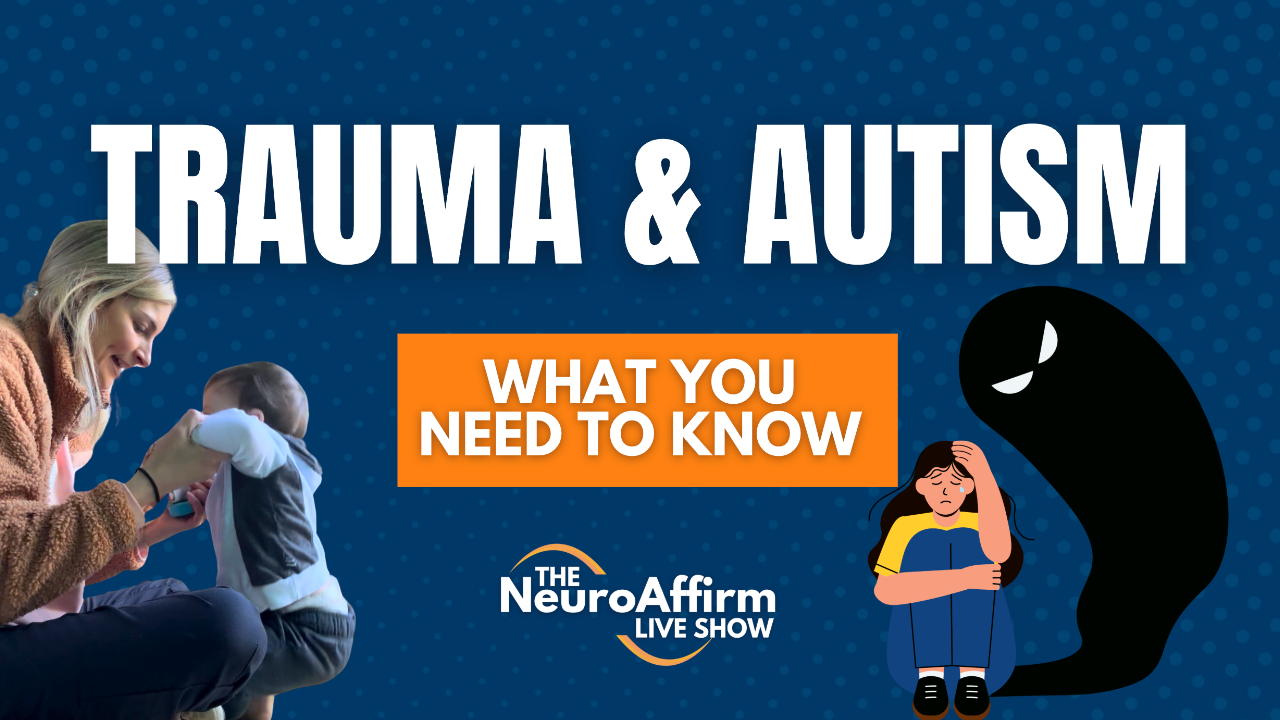
And if you want to hear more about this topic straight from the source, check out our recent NeuroAffirm Live Show: “Why Trauma-Informed Therapy is a Non-Negotiable for Autistic Kids,” Ep. 108.
We go in-depth on hidden trauma in traditional therapy, how trauma impacts the brain and nervous system, and exactly what it takes to make therapy safe, empowering, and healing for autistic kids.
