
How to Build Real Connection with Autistic Kids
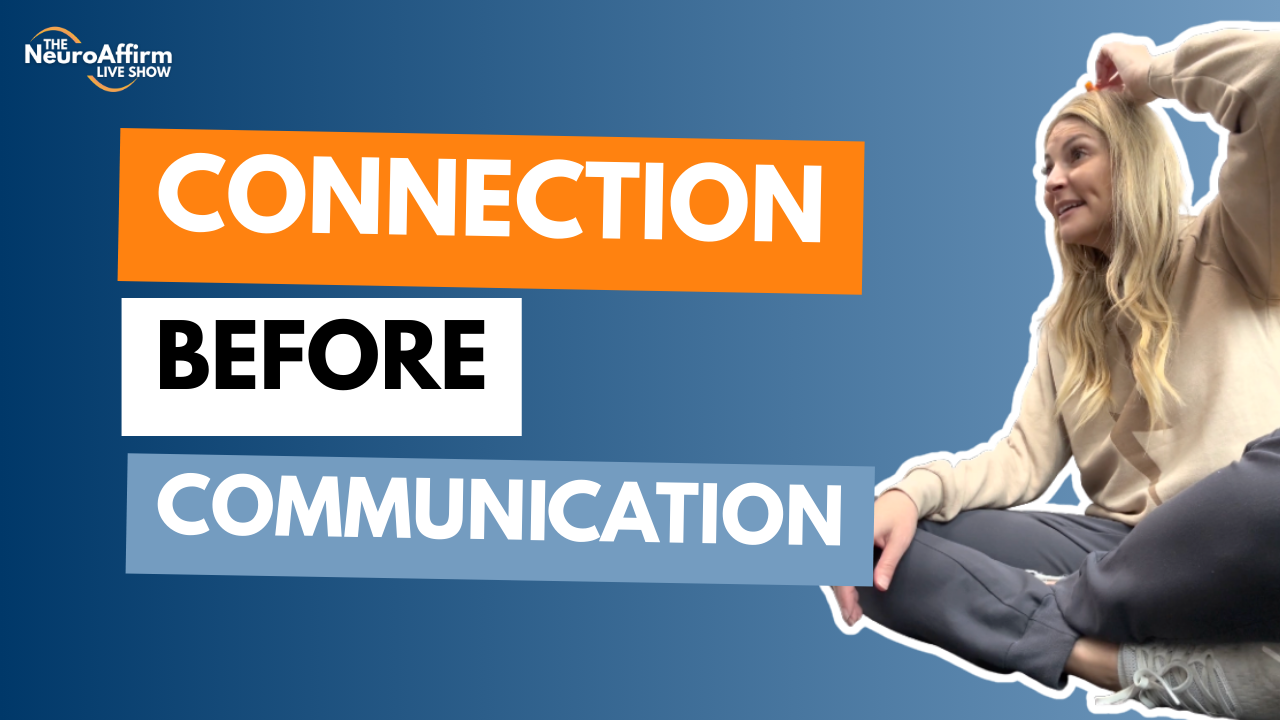
Early in my career, I had a client who would jump up into my arms every time I walked in for a home session.
She was excited to see me. She felt safe with me.
One day, I was co-treating with her 1:1 aide.
I opened the door to the family’s apartment and after the little girl jumped into my arms, her aide immediately said: “Get down! Feet on the ground.”
The aide saw attention-seeking behavior.
But what I saw was something different.
I saw connection.
Later, when I was pregnant (again 😅) and couldn’t lift her anymore, she would get extremely upset.
Not because she wanted to break rules.
But because something that mattered deeply to her…that moment of connection…was suddenly gone. Well, different.
That experience stuck with me.
Because when autistic kids resist therapy, avoid therapists, or seem disengaged, it’s rarely about the motivation.
More often, it’s about trust.
And trust takes time to build.
Why Connection Has Always Been My Starting Point
When I first entered the field, I was trained in Greenspan Floortime at the same time I was working as an SLPA.
So from the very beginning, I was taught something that shaped the way I practice therapy to this day:
Therapy starts with relationship.
Not compliance.
Not data.
Not goals.
Connection.
But over time I realized something important.
A relationship-based approach alone is not always enough.
Some kids want connection but struggle to access it because their nervous system is overwhelmed.
That realization led me to study sensory processing and regulation.
Because connection doesn’t just happen through interaction.
It happens when a child feels safe in their body.
The 4 Steps to Building Real Connection with Autistic Kids
After years of working with autistic kids and training therapists, these are the four principles that matter most.
1. Actually Care About Them
This might sound obvious, but kids know the difference between someone who is simply doing their job and someone who genuinely cares about them.
One moment changed the way I think about this forever.
A parent once asked me, with tear in her eyes:
“What would you do if he were your son?”
That question stuck with me. So much so that I wrote about him in my book.
Now I ask myself that constantly.
Would I recommend this type of therapy?
Would I want my kid working with this person?
Would I feel comfortable with my child in this classroom?
When you start viewing your clients through that lens, your priorities shift.
Connection becomes the goal, not just the outcome.
2. Co-Regulate First
A dysregulated adult cannot regulate a dysregulated child.
Kids pick up on our nervous system instantly.
If we walk into a session stressed, frustrated, or rushing, that’s the energy we bring into the room.
But when we slow down and regulate ourselves first, we help the child feel safe enough to engage.
Connection grows from co-regulation.
3. Care About What They Care About
SLPs are trained to focus on goals.
But connection happens when we shift our focus from our agenda to their interests.
What makes them light up?
What captures their attention?
What do they want to talk about, play with, or explore?
When we show genuine interest in what matters to them, connection grows naturally.
And once connection is there, communication often follows.
4. Treat Them as an Equal Human Being
Many therapy models rely heavily on compliance.
The therapist makes the rules.
The child follows them.
But when therapy is built around hierarchy, it can unintentionally communicate something harmful:
My rules matter more than your needs.
Boundaries are important. Expectations are important. (Hi, I’m a mom of 5 and I wouldn’t survive without them).
But know what else is important? Validation, autonomy, and choice.
When children feel respected as human beings with real feelings and preferences, they are much more likely to engage with us.
If building therapy around relationship, safety, and connection resonates with you and you want to go deeper, we put together a Book Club Kit just for you!
This is for professionals and families who want to take the ideas in my best-selling book, Ready Set Connect, and apply them in real life.
Inside the kit you’ll get:
🎧 Ready Set Connect Audiobook
Narrated by me so you can listen on the go.
📘 Ready Set Connect Guidebook
A practical workbook designed to help you apply the concepts from each chapter as you read.
🚀 Communication Accelerator
My best strategies for supporting communication development in autistic kids.
📖 Sensory-Communication Activities Guide
My go-to activities that you can copy/paste plus some of my favorite tools.
These resources are designed to help you move from understanding connection → actually building it in your therapy sessions.
As a THANK YOU to my paid Substack subscribers, we’re giving you the Book Club Kit for free!
If you haven’t joined me on Substack yet, click here to join now and unlock your full Book Club Kit today!
