
Strengthening Attention & Executive Functioning in Speech Therapy Sessions
Executive functioning (EF) is at the heart of how we learn, focus, and navigate daily life. I don’t know about you but it’s not something I feel like I got ANY training on in grad school. I know sometimes talking about attention and executive functioning can feel overwhelming. Which is why I was so excited to sit down recently with Tera Sumpter, SLP & Executive Function Education Specialist on our live show to dive into all things EF. Because when it comes to supporting our neurodivergent clients, understanding EF and how it develops can completely change the way we approach sessions.
Here are four of the high points from my sit down with Tera Sumpter about how executive functioning can impact your speech sessions:
- Foundational skills shape everything else – Attention, working memory, and perception have to be in place in order for higher-level skills to develop.
- Sensory differences can “turn off” EF – Dysregulation prevents children from accessing focus, planning, and self-monitoring.
- Attention is a limited resource – Kids need to learn how to direct their attention to what matters most and we can help them learn how to do this!
- Self-monitoring is key to generalization – When it comes to working on articulation with our neurodivergent students, it’s important that their executive functioning skills are in place. Without EF support, kids rely on you as the cue instead of learning to correct themselves.
Let’s dive into what we as SLPs can do in our sessions to better support our clients executive functioning skills.
Understanding Executive Functioning and How It Develops
Executive functioning is your brain’s internal cue system. It’s how we direct ourselves, control impulses, stay organized, and manage actions. Think of it as the brain’s “internal coach” that helps children plan, think ahead, and act with purpose.
A helpful way to picture EF is through a tree analogy: strong roots support the trunk, which then carries growth to the branches and flowers.

Roots: Foundational skills like perception of the environment, perception of self, attention, verbal and nonverbal working memory, and inhibition.
Stem: Trunk skills like initiation, self-monitoring, self-correcting, self-modulation, sense of time, pacing, and flexibility.
Flowers: Higher-level skills like planning, anticipating, analyzing, generating, associating, prioritizing, organizing, and decision-making.
Focusing on building strong roots first – perception, attention, and working memory – creates the foundation for higher-level skills to grow in therapy.
How Sensory Differences Affect Executive Functioning
For many autistic children, sensory differences can temporarily “turn off” EF skills. One of the roots of EF is perception of the environment. If sensory input is overwhelming or unpredictable, the brain is too busy just surviving to focus on higher-level skills.
Supporting regulation first allows children to access attention, planning, and self-monitoring. Without this, executive functioning skills can’t be strengthened.
When a child is regulated, you can actively work on EF skills instead of their brain being stuck in survival mode.
Strengthening Attention Skills
Something I hear a lot from parents and teachers is that they have concerns about the child and their ability to attend to an activity. And what is important to remember about attention is that it IS based on preference. So the question we should be asking ourselves is not “why is this child not attending?” but instead “is this activity engaging enough to get and keep their attention?”.
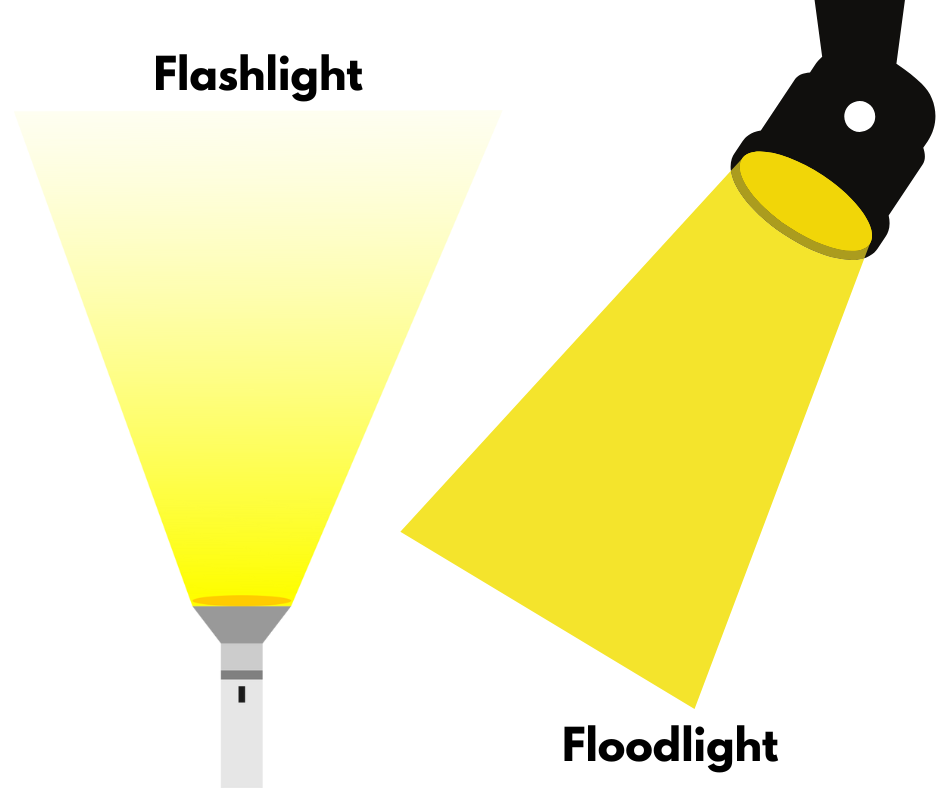
It’s helpful to think of attention as a flashlight. And you only get one. You can shine it on your teacher, therapist, or parent to learn, or on your own body to notice hunger, discomfort, or overstimulation. The flashlight can only point in one direction at a time. Our job is to help kids learn when and where to point their flashlight.
But here’s the thing about that attention flashlight…
Sometimes that flashlight is more of a floodlight where it’s taking in a lot of information at once.
This is especially true for our neurodivergent kids. Research shows autistic children often have:
- Increased sensory sensitivity
- Decreased sensory filtering
- More bottom-up processing (environment drives attention rather than goals)
- Difficulty ignoring irrelevant stimuli
This can lead to hypervigilance – constantly scanning the environment for new input or potential threats.
So what can you do to make sure that floodlight is more of a flashlight? If you guessed supporting their sensory needs, you’d be correct.
Supporting regulation helps children direct their attention flashlight toward what matters, giving them control and choice in where to focus.
Finally, let’s get into self monitoring and how to help kids generalize skills outside of the therapy room.
Why Speech Goals Don’t Always Generalize
Something that I have noticed in my own clinic is that for our neurodivergent clients, generalization of skills, especially when it comes to speech sound development, is really challenging for them.
They can do a skill beautifully in therapy and the moment they step out of the therapy room *poof* it’s gone. I asked Tera if this was related to executive functioning and it absolutely is.
Remember that your executive functioning system is your brain’s “internal coach”. And the EF skills of Self-monitoring and self-correcting (stem skills) are crucial in therapy. Many children rely on the clinician as an external cue for correcting them, which means they aren’t practicing self-monitoring.
So as SLPs, we can help our clients better generalize their skills outside of our therapy room by using a few strategies such as:
- Reflective questioning: “how do you think you did?”
- Teaching children to identify their own errors
- Gradually reducing external cues to help internalize monitoring
When children learn to self-monitor, they can generalize speech skills outside of therapy and strengthen their executive function skills at the same time.
If you want to hear more insights from Tera about supporting executive functioning skills, check out this episode of the NeuroAffirm Live Show: Ep. 107 – Supporting Attention & Executive Functioning in Autistic Kids ft. Tera Sumpter
Make sure to follow Tera on IG @terasumpter_slp
And to learn more about Tera's courses and her book “Seeds of Learning” visit https://terasumpter.com/
